
When Venture Debt Helps and When It Quietly Controls You
How to tell whether venture debt is extending runway or adding hidden pressure to the company.

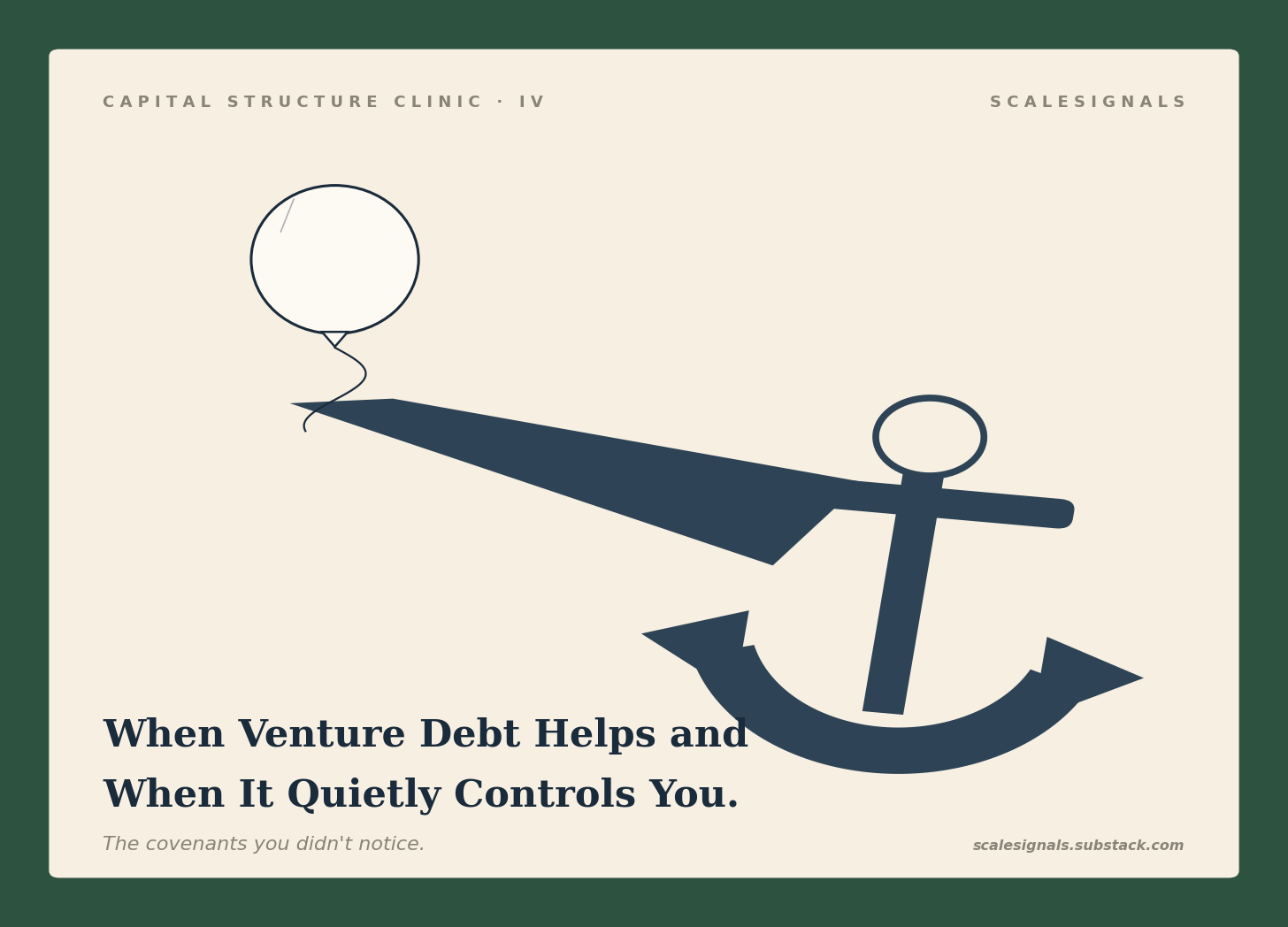
Venture debt is often described as non-dilutive capital.
That phrase is useful, but incomplete.
Debt may avoid immediate equity dilution, but it does not avoid obligation. It must usually be repaid. It may include covenants, warrants, reporting duties, cash controls, negative covenants, security interests or investor consent requirements.
Used well, venture debt can be powerful. It can extend runway after an equity round, finance working capital, bridge to a milestone, or reduce the amount of equity a company needs to sell.
Used poorly, it can quietly control the company.
A simple example: a company raises equity, adds venture debt, and assumes it has 24 months of runway. Growth slows. Revenue misses plan. The lender becomes more involved. The company cannot make certain decisions without consent. A future investor now has to assess not only the business, but also the debt overhang.
The issue is not whether debt is good or bad. The issue is whether the business has the predictability to carry it.
Debt works best when the company has a credible repayment path, strong cash discipline and clear milestones. It becomes dangerous when founders use it to avoid a valuation conversation or delay a necessary strategic reset.
Equity can be expensive because it dilutes. Debt can be expensive because it narrows your room to manoeuvre.
Paid members get the venture-debt pressure test before signing a facility.
