Why Founders Are Quietly Raising Debt and Calling It Equity.
The instrument founders raise on has been changing for three years. The mental model hasn't.

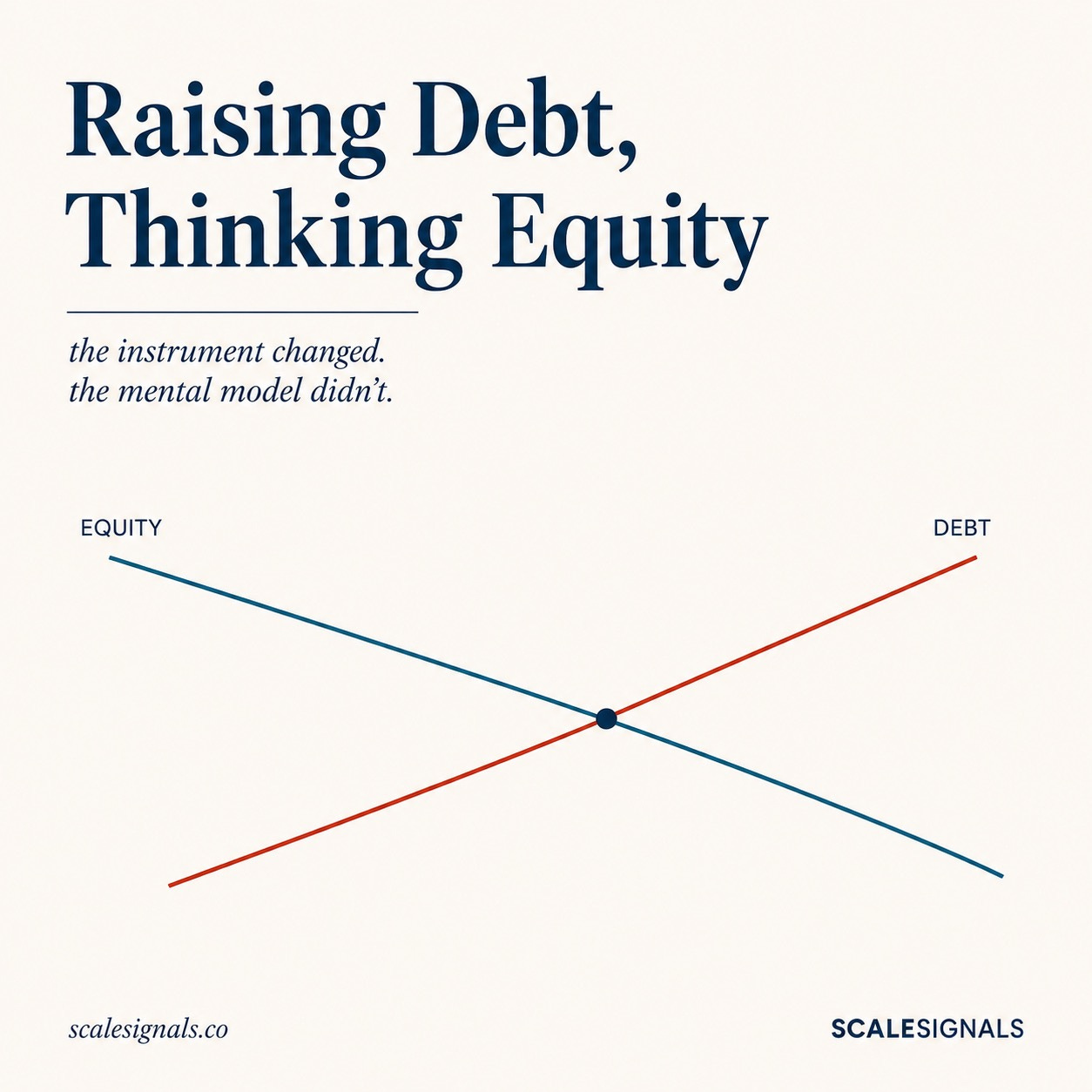
A founder I know raised what he described as a venture round last year. Eight million dollars, growth stage, a name-brand lender on the term sheet. He told everyone he’d raised a Series B. When I looked at the actual terms, most of it was debt. A venture debt facility with warrants attached, structured to look and feel like equity in the room but to behave like a loan on the balance sheet.
He didn’t fully understand the difference until twelve months later, when the facility’s covenants started constraining decisions he assumed were his to make.
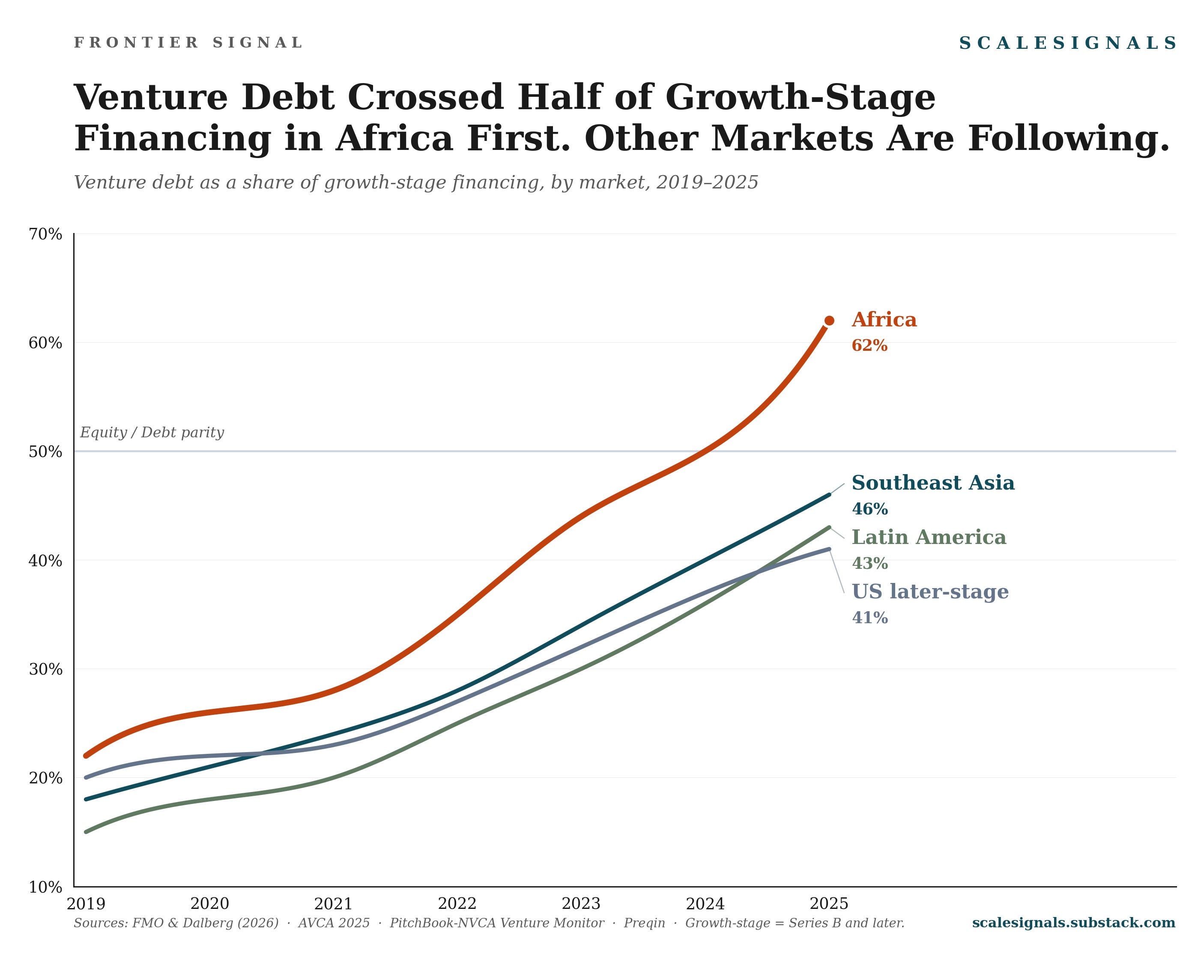
I’ve watched a version of this happen enough times now that I think it’s the most important under-discussed shift in how companies actually get funded. The instrument has been changing underneath founders for three years. The conversation, the press coverage, and most founder education are still built around equity. The money increasingly is not.
This piece is about that shift — what’s actually happening, why it’s happening, and what it costs the founders who raise on the new instrument without understanding that the instrument has changed.
For most of the last venture decade, the default growth-stage instrument was equity. A company raised a priced round. Investors took ownership. The cap table got more crowded, the valuation went up, and everyone’s incentive was aligned around the same thing — the eventual exit. Debt existed at the edges, used by a small number of sophisticated founders for specific purposes, but it was not the default. Equity was the default, and the entire founder playbook was built around it.
That has been changing, quietly, since roughly 2022. And the change is structural, not cyclical.